10 Digital Marketing Trends to Watch in 2026
Digital Marketing Trends in 2026: What Businesses Need to Know
The digital marketing industry never stands still. Rapid technological advancements, rising customer expectations, and the growing role of artificial intelligence are transforming the way brands connect with their audiences.
As we move closer to 2026, understanding these shifts is essential for businesses that want to stay competitive and build stronger relationships with customers.
Digital marketing is no longer just about promoting products or services. It is about creating meaningful experiences that resonate on a deeper level.
In this article, we’ll explore the key digital marketing trends and emerging technologies shaping the future of marketing.
Understanding the Current Digital Marketing Landscape
Before planning for the future, it’s important to understand where digital marketing stands today.
Modern consumers are informed, value-driven, and increasingly sceptical of traditional advertising. They prefer brands that reflect their values and communicate with authenticity.
Because of this, businesses must move away from mass marketing and adopt highly personalized strategies.
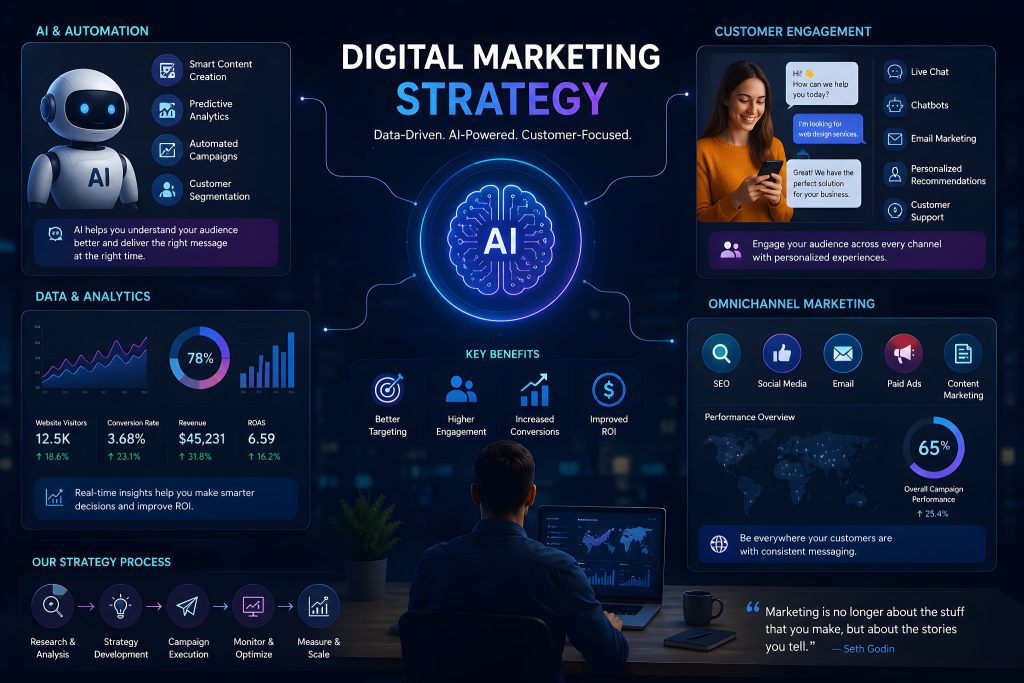
What once relied on basic ads has now evolved into data-driven marketing powered by AI, personalization, and targeted content. The one-size-fits-all model has been replaced by:
- Targeted engagement
- Interactive experiences
- Seamless multi-device integration
- Data-backed decision-making
As we approach 2026, digital marketing will continue to accelerate, bringing a stronger focus on innovation, authenticity, and immersion.
Key Takeaways
- Consumers now expect relevance, authenticity, and value.
- Personalized marketing is replacing generic mass advertising.
- Data, AI, and cross-platform experiences are shaping the future.
Tip: If your marketing still speaks to everyone the same way, it may not truly connect with anyone.
Key Digital Marketing Trends Shaping 2026
1. The Expanding Role of Artificial Intelligence and Automation
Artificial intelligence is one of the most powerful forces shaping digital marketing. By 2026, AI will play an even bigger role in helping marketers improve user experiences, streamline workflows, and make smarter data-driven decisions.
Content Personalization
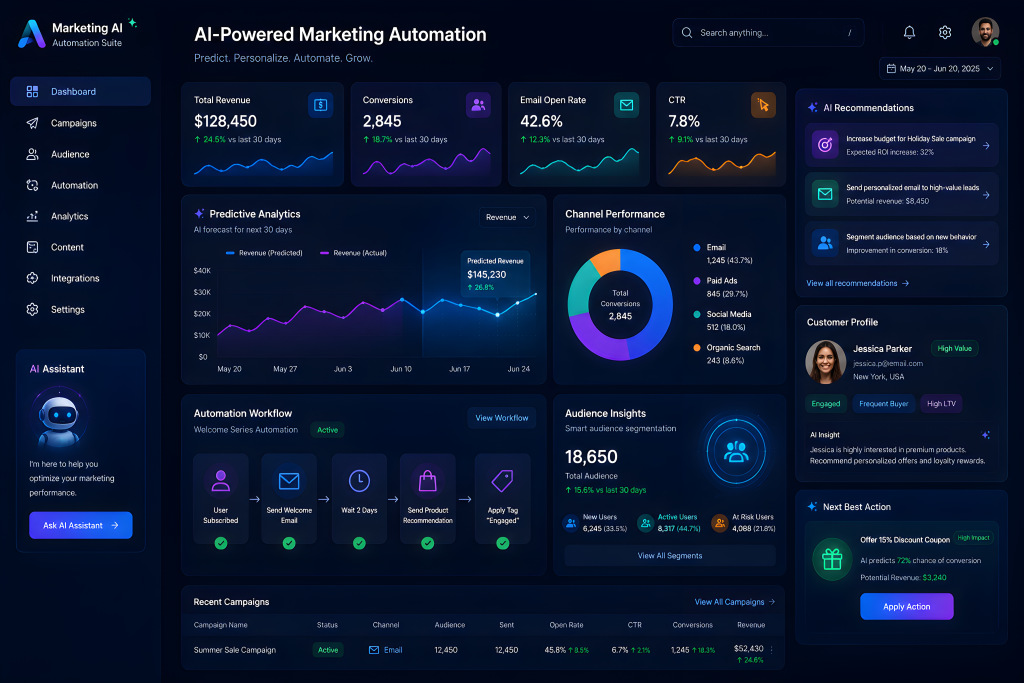
AI-powered systems can analyze massive volumes of data, allowing marketers to create hyper-personalized content for each audience segment.
AI algorithms will personalize experiences based on:
- Consumer behavior
- Preferences
- Past interactions
- Buying patterns
This makes every touchpoint more relevant and engaging.
Automated Workflows
AI will also automate repetitive tasks such as:
- Email marketing
- Social media scheduling
- Ad placement
- Lead nurturing
This allows marketers to focus more on strategy and creativity.
According to a Salesforce survey, 75% of marketers are either experimenting with or have already used AI in their workflows. That number is expected to rise as AI continues to prove its value.
Predictive Analytics
AI-powered predictive analytics will help businesses anticipate customer needs and trends.
This means marketing campaigns can be adjusted in real time to:
- Improve performance
- Increase ROI
- Stay ahead of competitors
- Respond faster to audience behavior
Key Takeaways
- AI will drive personalization, automation, and predictive decision-making.
- Repetitive tasks can be streamlined, saving time and resources.
- Real-time optimization will help brands improve campaign performance.
Tip: Use AI to support your strategy, not replace human creativity.
2. Immersive Experiences with Virtual and Augmented Reality (VR & AR)
Consumers in 2026 will expect more than passive interactions with brands. They will want immersive experiences that bring products to life.
VR and AR technology will help meet this expectation.
Imagine shopping for clothing, cosmetics, or home furnishings without leaving your home. With virtual reality, customers can explore products in realistic settings and make more confident purchase decisions.
Experiential Marketing
Brands will use augmented reality to create interactive campaigns that boost engagement.
This can help customers build deeper emotional connections with brands.
Better Customer Support
VR and AR will also improve customer service.
Support teams may use these technologies to:
- Guide customers through complex product setups
- Provide instant visual assistance
- Reduce support friction
- Improve satisfaction and loyalty
Image Credit: Neoman
[Image Placeholder – Customer using VR to experience a virtual shopping environment]
Key Takeaways
- VR and AR can create memorable customer experiences.
- Interactive product demos can improve purchase confidence.
- Immersive support can enhance customer satisfaction.
3. Social Media: The New Search Engine
Social media is no longer just a place for photos and updates. It has become a powerful platform for discovering information, brands, and products.
By 2026, social networks will likely become even more important as replacement search engines, especially among younger users.
Social Discovery
HubSpot reports that 87% of social media marketers believe people are increasingly searching for businesses, products, and services using social media.
This trend is especially strong among younger audiences who prefer social platforms for:
- Reviews
- Recommendations
- Product discovery
- Brand research
Shoppable Content
Shoppable content allows users to buy products directly from social media posts without leaving the app.
Social media accounted for 18.5% of online transactions in 2023 and is expected to continue growing.
To take advantage of this trend, brands need to create content that is:
- Attractive
- Searchable
- Easy to shop from
- Relevant to user intent
Influencer Impact
Micro-influencers and nano-influencers are becoming especially powerful in social discovery.
Their audiences are often:
- Highly loyal
- Niche-focused
- More engaged
- More trusting of recommendations
This makes them valuable partners for brands looking to build credibility and reach the right audience.
[Image Placeholder – Social media discovery feed with shoppable posts and influencer content]
Key Takeaways
- Social media is becoming a major discovery and search channel.
- Shoppable content is helping users move from browsing to buying faster.
- Micro- and nano-influencers can drive strong engagement and trust.
4. The Surge of Voice-Activated Technology
Voice search is becoming more important as smart speakers and voice-enabled devices become part of everyday life.
By 2026, digital marketing strategies will need to include voice search optimization to stay visible.
Image Credit: Backlinko
[Image Placeholder – Smart speaker and voice search optimization concept]
Voice Search Optimization (VSO)
Voice queries are usually more conversational than typed searches.
That means marketers should optimize content using:
- Natural language
- Long-tail keywords
- Question-based phrases
- Local search signals
Using schema markup and improving local SEO can also increase visibility in voice search results.
Voice-Activated Campaigns
Marketing campaigns will also begin adapting to voice-first environments.
For example, brands could create voice-activated ads that encourage users to:
- Ask questions
- Interact with smart devices
- Request more information
- Explore products through voice commands
Key Takeaways
- Voice search requires conversational, natural-language content.
- Local SEO and schema markup can improve visibility.
- Voice-activated campaigns may become an important engagement channel.
Tip: Write content the way people speak, not just the way they type.
5. Embracing Ethical and Sustainable Marketing Practices
Today’s consumers care more about environmental and social responsibility than ever before.
They want transparency, accountability, and proof that brands are acting responsibly.
By 2026, ethical and sustainable marketing will be essential.
Transparency and Trust
Companies need to clearly communicate their values, including:
- Fair labor practices
- Ethical sourcing
- Environmental responsibility
- Honest business policies
Trust is becoming a major purchase driver, especially as customers increasingly align themselves with brands that reflect their beliefs.
Sustainability Initiatives
Eco-conscious customers are more likely to support brands that adopt sustainable practices, such as:
- Using renewable resources
- Reducing packaging waste
- Lowering carbon impact
- Supporting environmentally responsible operations
Social Impact Campaigns
Brands will also highlight their support for:
- Diversity
- Social issues
- Community initiatives
- Positive change
Campaigns that emphasize real social impact can strengthen long-term loyalty.
[Image Placeholder – Sustainable branding campaign with eco-friendly packaging and community impact visuals]
Key Takeaways
- Transparency is critical for building trust.
- Sustainable practices can differentiate your brand.
- Social impact marketing supports loyalty and brand goodwill.
6. Contextual and Personalized Advertising
Mass advertising that interrupts users is losing effectiveness.
By 2026, relevant and personalized advertising will dominate because it aligns with how people consume content.
Contextual Targeting
Contextual targeting means showing ads based on what people are reading, watching, or engaging with online.
For example:
- A travel ad may appear on a vacation blog.
- A fitness product ad may appear on a health article.
- A home décor brand may appear on a design website.
This makes ads feel more useful and less intrusive.
Sponsored Content with Value
Brands will focus more on sponsored content that:
- Educates
- Entertains
- Inspires
- Solves a problem
This approach adds value while still promoting the brand in a subtle way.
Credible Endorsements from Influencers
Influencer marketing will remain a major part of digital marketing, but authenticity will matter more than ever.
People are more likely to engage with influencers they trust, making real and credible endorsements highly effective.
[Image Placeholder – Personalized ad placement on a digital content page]
Key Takeaways
- Contextual ads feel more relevant and perform better.
- Sponsored content should provide value, not just promotion.
- Authentic influencer partnerships will continue to drive results.
Preparing for 2026 and Beyond: Key Takeaways
As we move into 2026, the digital marketing landscape will be defined by innovation, customization, and ethics.
Brands that want to thrive must embrace new technologies, adapt to consumer expectations, and stay committed to transparency and accountability.
What Businesses Should Focus On
- Adopt Automation and AI
Use AI to personalize content, speed up workflows, and support smarter decision-making. - Invest in Interactive Experiences
VR and AR can help create memorable brand interactions that improve engagement. - Optimize for Voice Search
As voice-enabled devices grow, voice search optimization will become essential. - Put Ethics and Sustainability First
Brands that align with customer values will build stronger trust and loyalty. - Use Social Media as a Discovery Tool
Shoppable and searchable content will become increasingly important as social platforms evolve into search engines.
[Image Placeholder – Future-focused digital marketing roadmap for 2025]
Tip: The brands that win in 2026 will be the ones that combine technology with authenticity.
Key Takeaways
- Digital marketing in 2026 will reward relevance, trust, and innovation.
- Businesses need to stay flexible and customer-focused.
- Long-term success will come from genuine engagement, not just visibility.
Conclusion
The future of digital marketing is full of opportunity for brands that are willing to evolve.
From AI-powered personalization and immersive VR/AR experiences to voice search optimization and ethical branding, the trends shaping 2026 are all about creating smarter, more meaningful customer connections.
The brands that succeed will be the ones that:
- Innovate consistently
- Adapt quickly
- Put customers first
- Build trust through authenticity
- Use emerging technology wisely
Digital marketing is no longer just about keeping up with trends. It’s about understanding them and using them in ways that truly connect with your audience.
Work with Rochak Enterprise
If you’re looking for a digital marketing partner to help your business navigate this changing landscape, Rochak Enterprise is here to guide you.
We can help you:
- Build a future-ready digital marketing strategy
- Improve your online presence
- Create engaging, high-performing content
- Adapt to the latest marketing trends
Get in touch with Rochak Enterprise today to discover how we can help you achieve your goals and turn your business vision into reality.
[Image Placeholder – Professional team collaborating on a digital marketing strategy]